Red Deer EMS calls for opioid responses rose drastically after OPS closed
Published 3:58 pm Friday, January 9, 2026
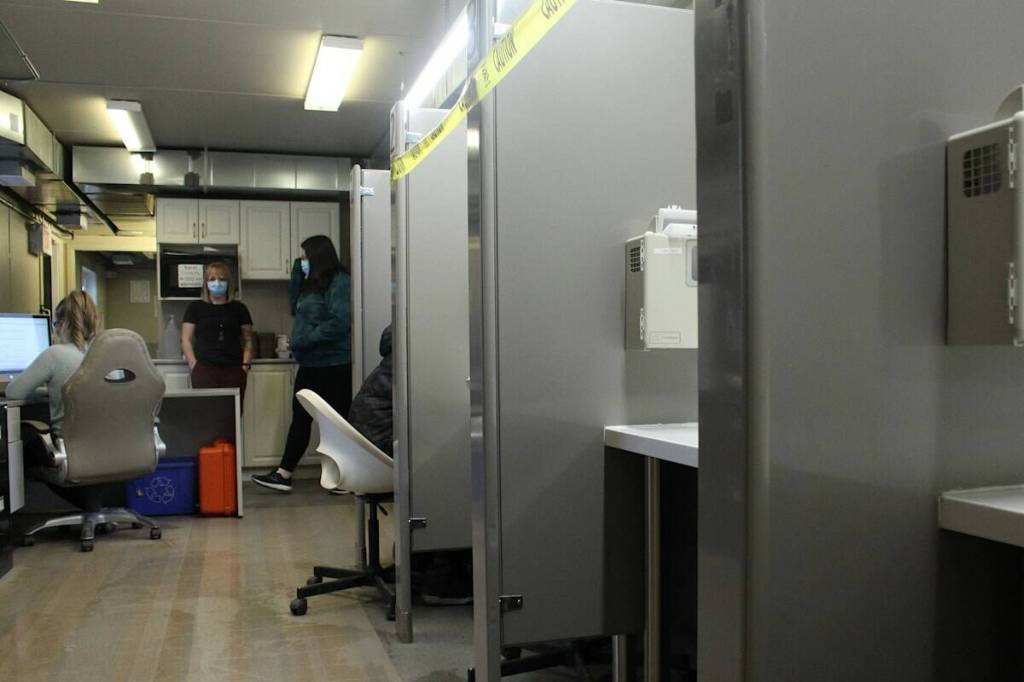
Ambulance responses to opioid-related events surged 112 per cent in the nine months after Red Deer’s overdose prevention site closed last March.
Crews responded 263 times compared to 124 during the same period in 2024, according to the Alberta Substance Use Surveillance System.
Brad Readman, Red Deer International Association of Firefighters (IAFF) Local 1109 president, said that sharp increase in EMS calls was directly related to the closure of the overdose prevention site (OPS), and that the OPS should reopen.
“People had a place to go. They had trained staff there to deal with overdoses when they did occur,” Readman said.
Funding cuts to the harm reduction agency Turning Point also led to more calls to EMS, he added.
The OPS was shut down at the end of March 2025 after city council asked the province to close the site in favour of other supports for those with drug addictions.
City council made its decision following a public hearing where business owners spoke out about an increase in vandalism and crime attributed to the OPS, while supporters recounted how the OPS saved lives.
2025 was the busiest in the last nine years when it came to EMS responses to opioid-related events with a total of 292. Until now, 2023 had been the busiest year with 240 responses.
December 2025 also saw the most responses in any month through the years at 47, and the first week of December had 16 EMS responses, the most in any single week over the years.
Readman said there’s no one, magic solution to solve the opioid crisis.
“People are going to use illicit drugs. That’s not going to change. We need to find a way to manage it to have a decrease in overdoses.”
He said more will die as drugs continue to become more potent than they already are. Even now, Narcan is sometimes administered two, three, sometimes four times, and they cannot be saved.
Similar to Red Deer, Toronto also saw its nine OPS or SCSs (safe consumption sites) close in March 2025 after years of criticism that the sites brought crime and disorder.
But a recent Toronto study found that OPS/SCSs were associated with a decrease in local crime over time.
The McGill University study Toronto’s Supervised Consumption Sites and Local Crime concluded that the association between OPS/SCSs and crime was “generally neutral to beneficial.”
“This ecological cohort study found OPS/SCS were associated with immediate increases in break and enters, but trends in outcomes declined per month, while trends in assaults, robberies, thefts over $5,000, bicycle thefts, and thefts from motor vehicles also decreased,” the study said.
“Site-specific analyses showed some OPS/SCS were associated with increases in local crime while most were not.”
The Ministry of Mental Health and Addiction said the optimistic conclusions drawn by the harm reduction researchers should be treated with caution.
“Even in this study, statistics and data show that SCSs in Toronto did not universally improve crime rates,” said the ministry in a statement.
“The study looked at nine drug consumption sites in Toronto. It is not applicable or reflective of what many Albertans have experienced around drug consumption sites here. The study also only tracked five types of major crimes and the most directly affected crime category, break and enters, spiked significantly by nearly 50 per cent following drug consumption site implementation and are only now slowly trending back towards previous levels.
“It did not track public disorder issues such as discarded drug paraphernalia, public drug use, loitering, petty crime, unreported crime, public intoxication, public urination and defecation. These are important factors contributing to the perception of people feeling safe in their own community.”
The ministry said the Alberta Recovery Model offers an array of effective addiction treatments and services. It is a comprehensive, recovery-focused approach that provides medication options and prioritizes long-term wellness.
“Drug consumption sites do not break the cycle of addiction; they prolong it. Real change comes from recovery-oriented care; treatment that helps people reclaim their lives, rebuild relationships, and restore hope.”