Central Alberta political leaders urge feds to save Lacombe Research Centre
Published 2:30 pm Thursday, February 26, 2026


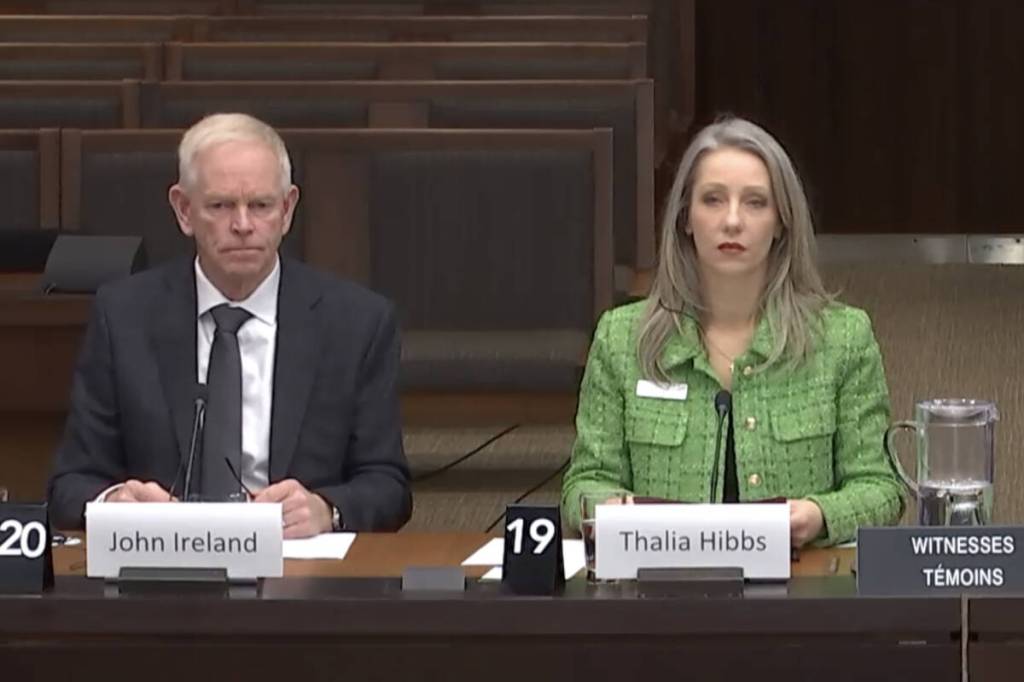



Closing Lacombe Research and Development Centre would jeopardize farmers’ ability to compete globally and deal a major economic blow to the city, a federal government committee in Ottawa was told on Thursday.
Lacombe Mayor Thalia Hibbs and Lacombe County Reeve John Ireland appeared before the House of Commons Standing Committee on Agriculture and Agri-Food to urge the federal government to reverse a decision to close Lacombe Research and Development Centre.
The centre was one of three to be axed this year across the country, eliminating 665 jobs over the next 12 months.
The city and county responded by forming the Lacombe Research and Development Centre Closure Response Task Force to try to convince the federal government to reverse its decision to close down a research centre with a nearly 120-year history.
Hibbs said the 119-year-old centre that employs 112, including 22 research scientists, is one of the city’s biggest employers and losing the facility would have a huge impact on the local economy.
Centre employees may be forced to find work elsewhere and local businesses that served the facility on its 2,000-acre site will lose a big customer.
“It’s going to affect a lot of small businesses and their bottom line,” Hibbs said. “It’s going to make it a lot more difficult for them, potentially, to even survive.”
The city has been trying to boost economic development and diversify the local economy “and then this sudden blow out of nowhere happens and now we’re reeling from it,” she told the committee chaired by Toronto-area MP Michael Coteau.
In her opening five-minute address to the committee, Hibbs said the facility’s closure creates “an economic and social shock to my community of 15,000.”
Top scientists, tech teams, other staff and their families will be lost along with research-based employment opportunities for area students.
Visits from international scientists, industry collaborators and trade missions will end, which will “cascade negatively throughout national research networks.”
“Research teams built over decades cannot be reassembled once dispersed. If this centre is dismantled, the loss is permanent.
“Closing Lacombe will eliminate the primary player in keeping Canadian beef, pork and lamb globally competitive,” she said.
“Most critically, there will be an increased vulnerability to future threats.”
Hibbs called on the government to pause any decision until its consequences had been fully investigated and fiscal due diligence and a cost-benefit analysis completed in a 12- to 18-month validation period.
“A pause costs very little. A mistake costs over a century of public investment.”
Lacombe city council is also calling for support from Alberta Municipalities, which represents about 260 municipalities. A resolution will be taken to the organization’s upcoming spring conference.
Ireland said local farmers counted on the research conducted at the centre to ensure they had crops able to flourish in a changing climate and the evolving demands of a global market.
“The challenges facing central Alberta farmers today are more complex than at any point in the last century. We are operating in climate extremes.”
“You cannot manage a farm in Lacombe using data gathered from anywhere else in the country, even southern Alberta,” he said, adding the growing conditions are vastly different in the two regions.
Every dollar in research generates returns of $63 or more, he said. “In what other sector would you consider cutting a program with a 6,000 per cent return on investment?”
“To forgo research and development in a sector that contributes so significantly to Canada’s GDP is not finding efficiencies, it is being short-sighted.”
Unbiased research is also critical in helping farmers cope with geopolitical realities.
“When tariffs and sanctions hit, our only defence is superior quality and efficiencies in our product,” he said.
“As the place we sell to changes, we need to have the means possible to change our part of the production cycle to reflect that. And that comes from research. And by and large that would be most efficiently and significantly done on the local level.”
Ponoka-Didsbury MP Blaine Calkins asked Ireland what the consequences of closing the facility and losing its research would be.
Ireland said a significant reduction in future agricultural production could be expected.